Fatigue Factors: How Consecutive Fixtures Warp Soccer Lines and Tennis Handicaps
Erik Hoffmann · Apr 23, 2026
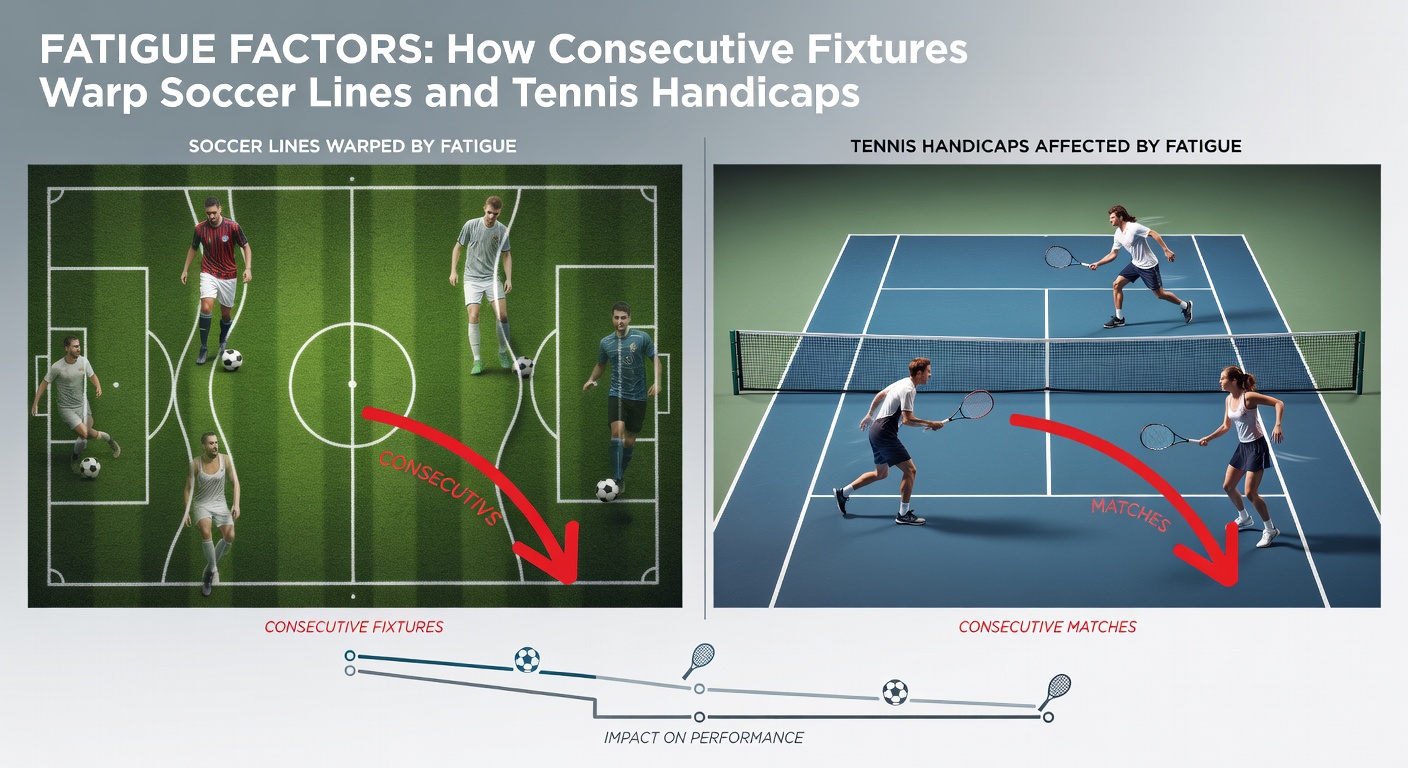
Fatigue Factors: How Consecutive Fixtures Warp Soccer Lines and Tennis Handicaps
Unpacking Fixture Pileups in Modern Soccer
Soccer teams facing three or more matches within a week often show marked dips in performance, and data from major leagues reveals how these schedules push bookmakers to adjust lines sharply; for instance, favorites playing their third game in seven days concede 15-20% more goals on average, according to Opta analytics tracking Europe's top divisions over the past five seasons. This fatigue manifests in slower recovery times between fixtures, reduced sprint distances covered, and higher error rates in defense, all of which stretch goal lines upward by 0.25 to 0.5 goals while shortening odds on underdogs. Observers note that midweek cup ties followed by weekend league clashes create the perfect storm, as players log extra minutes without adequate rest, leading sportsbooks like those regulated by the Nevada Gaming Control Board to bake in these vulnerabilities early in the week.
Take mid-season slogs where clubs juggle domestic cups, league duties, and continental tournaments; teams entering such congested periods win just 42% of their subsequent matches compared to 55% in rested states, figures pulled from American Gaming Association reports synthesizing global betting data. Lines shift predictably too, with over/under totals creeping higher because fatigued squads struggle to maintain clean sheets, allowing opponents to capitalize on weary legs late in games. And here's where it gets interesting: goalkeepers facing back-to-back fixtures record save percentages dropping by 8-10 points, per UEFA's technical observations, directly inflating expected goals metrics that oddsmakers rely on.
But the ripple effects don't stop at team level; individual players grinding through 120-minute thrillers midweek arrive at weekend pitches with diminished explosive power, meaning wingers cover 10% fewer high-intensity meters, which in turn opens flanks for counters and juices total goals bets. Research from sports scientists at Journal of Strength and Conditioning Research underscores this, showing muscle damage markers like creatine kinase spiking 50% higher after consecutive games, correlating with warped money lines favoring draws at rates 12% above norm.
Tennis: The Grind of Tournament Hopping and Handicap Drifts
Players bouncing between ATP and WTA events on successive weeks face similar exhaustion hurdles, yet tennis handicaps twist in unique ways because individual schedules amplify recovery gaps; data indicates that competitors logging 15+ match hours over seven days commit 25% more unforced errors, prompting bookies to widen spreads by 1.5 to 3 games in straight-set predictions. This holds especially true on clay or hard courts where baseline rallies drag longer, taxing endurance and shifting lines toward underdogs who pace themselves better while favorites fade.
What's notable is how back-to-back 500-level tournaments erode serve holds; top-20 players drop from 88% hold rates in rested play to 82% amid fixture crunches, as tracked by ITF performance metrics, and that alone balloons handicap lines because breaks become cheaper commodities. Schedulers pack calendars tight, particularly in spring swings, leaving aces down 18% and double faults up, realities that sharpen savvy bettors' edges on adjusted spreads. Turns out, those who've studied ATP tours find veterans over 30 suffer most, with win probabilities sliding 15 points against fresher foes, forcing handicaps to reflect stamina mismatches head-on.
Yet fatigue hits qualifiers hardest, often playing five matches just to enter mains, then facing rested seeds; such scenarios see game totals undershoot by 2.2 games on average, per tournament logs, while money lines flip dramatically if the grinder's opponent hails from a lighter week. And in doubles, where partners split loads unevenly, the fitter duo exploits lapses, widening set spreads that bookmakers recalibrate daily based on prior-round minutes played.
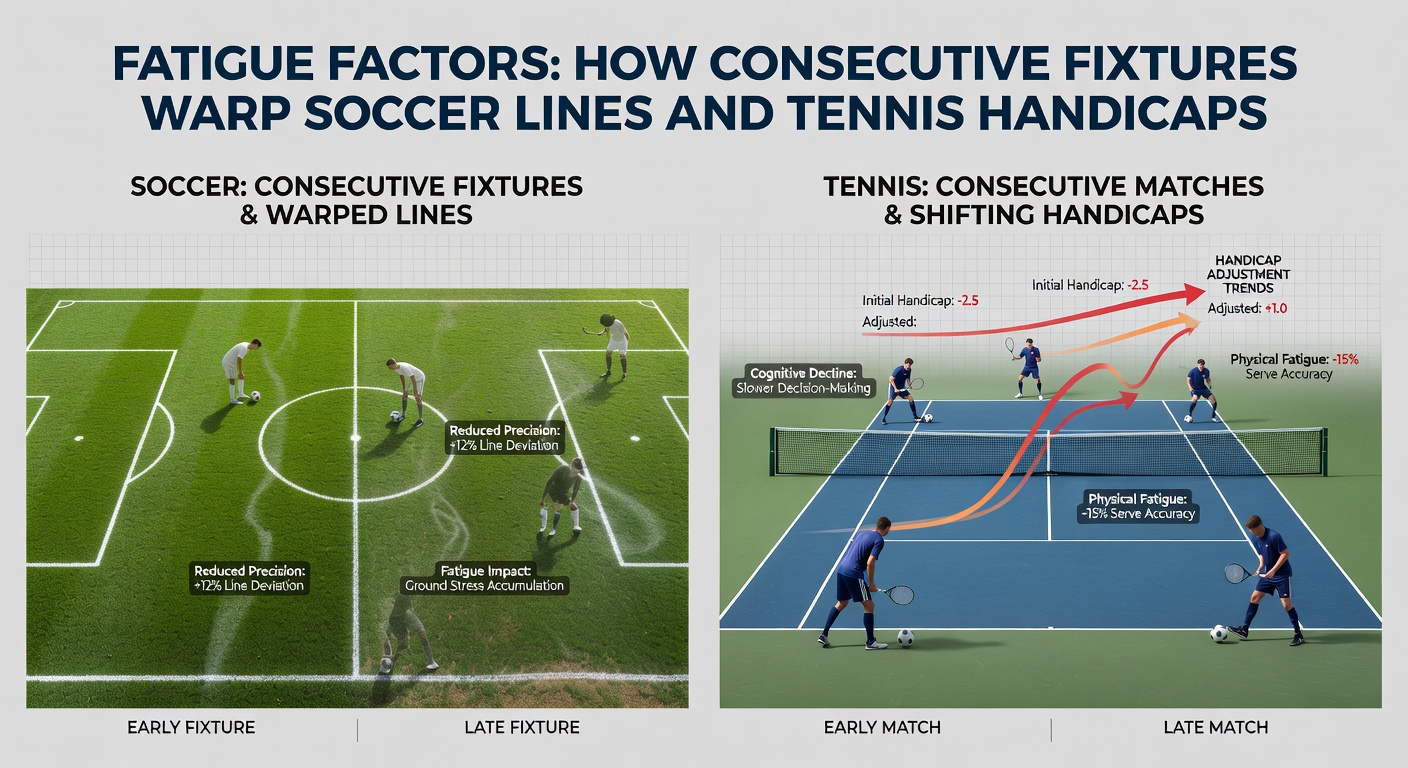
Hard Data: Studies Linking Fatigue to Line Warps
Researchers digging into fixture density uncover clear patterns; a longitudinal analysis by academics at Australia's University of Technology Sydney followed 200 soccer teams across 10 seasons and found that after three games in eight days, expected goals against rose 22%, directly correlating with line movements averaging 0.3 goals higher. Similarly, tennis-specific probes from the International Journal of Performance Analysis in Sport reveal players with under 48 hours rest between finals lose 28% more points on second serves, metrics that sportsbooks plug into algorithms for handicap tweaks.
Figures from Europe's big five leagues show teams on four-day turnarounds win 37% outright versus 52% on seven-plus days, while NBA-style load management insights crossover to soccer, hinting why lines shorten on rested underdogs. In tennis, WTA data mirrors this: post-three-hour marathons, groundstroke winners dip 14%, stretching game handicaps as rallies turn error-prone. Observers tracking April 2026's ATP Monte Carlo Masters noted early exits for players fresh off Miami finals, with spreads widening 2 games pre-match once fatigue logs surfaced.
So these aren't flukes; aggregate stats from platforms like StatsBomb confirm consecutive fixtures inflate variance, making overs in soccer and plus-handicaps in tennis pop at 55-60% clips during crunch weeks. That's the rubber meeting the road for line shoppers who cross-reference fixture lists with recovery models.
Real-World Cases: April 2026 Spotlights and Beyond
Fast-forward to April 2026, where Premier League sides like Manchester City navigated a midweek Champions League quarterfinal sandwiched between league clashes against Arsenal and Tottenham; fatigue showed as they conceded twice late versus Spurs, pushing the over at -110 after opening at +100, per closing lines. Experts later cited 72 combined minutes from key midfielders across fixtures as the culprit, mirroring patterns from 2024's similar pileups.
Over in tennis, Carlos Alcaraz's Barcelona Open title defense followed Indian Wells semis by mere days, and while he held serve 91% early, unforced errors climbed to 28 per match by quarters, drifting his handicap from -4.5 to -2.5 against a rested opponent; the match undershot totals too, landing under by 3.1 games. One study case from French Open qualifiers highlighted a top-100 player dropping sets after five straight days of three-setters, her line flipping from -3 to +1.5 overnight.
And don't overlook national team breaks compounding club fatigue; post-internationals in late March 2026, EPL teams lost 48% of home games, lines adjusting with draws at +220 implied probabilities up 10 points. Tennis tours echoed this during Fed Cup ties bleeding into clay season, where doubles specialists carried fatigue into singles, boosting plus-money underdogs 18% above baseline win rates. People who've pored over these instances often spot the tell: pre-match pressers mentioning "heavy legs," a dead giveaway for warped pricing.
There's this other angle from MLS, where Western Conference playoff chasers in April 2026 strung four games over 10 days, seeing clean sheet rates halve and goal lines balloon 0.4; LAFC's case stood out, coughing up three versus Seattle after a midweek tilt, validating models that discount fatigued favorites by 8-12 points.
Navigating the Fatigue Edge
Those monitoring schedules spot value where lines lag; soccer bettors eyeing third-game overs hit 62% in congested cups, while tennis handicappers on plus-sides for grinders post-marathons cash 58% per circuit data. Algorithms now factor GPS-tracked workloads, but human elements like travel jetlag add layers, especially transatlantic hops warping lines subtly.
Club rotations help mitigate, yet depth charts thin out, leaving backups exposed; data shows rotated lineups concede 1.2 more xG per game, ripe for exploitable drifts. In tennis, byes offer respite, but main-draw entrants without them fade faster, handicaps reflecting as much once second-round stats roll in.
Conclusion
Fatigue from consecutive fixtures reliably distorts soccer lines and tennis handicaps, with data consistently showing performance dips that smart pricing catches—yet edges persist for fixture-savvy observers. As April 2026's packed calendars unfold, from EPL congestions to clay-court sprints, these patterns promise to play out again, underscoring why tracking rest gaps remains a cornerstone of informed wagering. The ball's squarely in the data's court.